September 15, 2026 · 4 min read
Menopause Diet Foods: What to Eat and Why
By The Menopause Diet Plans Team — evidence-based nutrition writers
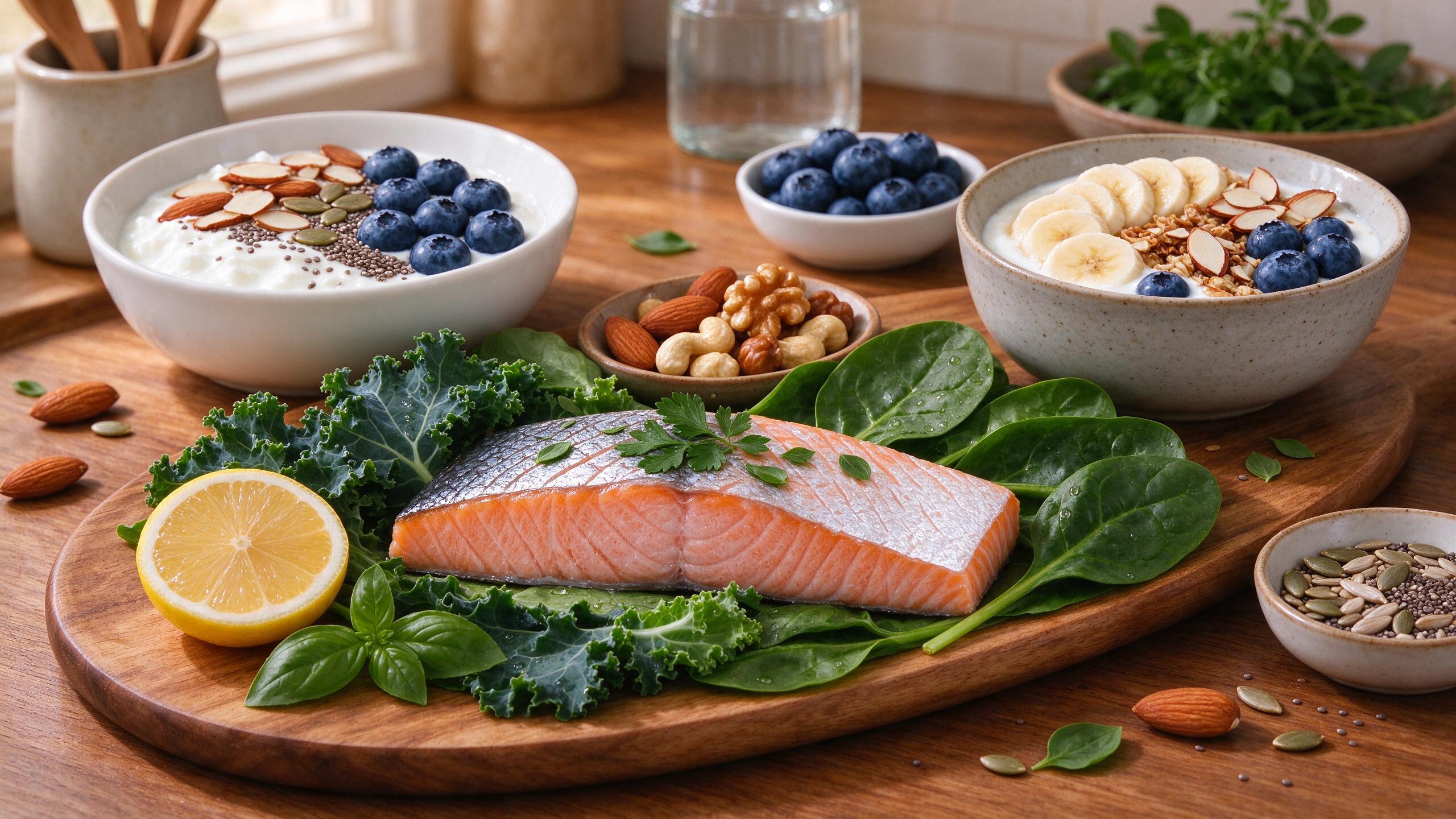
There is no single food that changes everything about the menopause years, and any article that promises one is selling something. What does work is a pattern: a plate built from protein, fiber, calcium, and healthy fats, with added sugar and alcohol kept in check. This guide walks through the food groups that earn their place on a midlife plate, why each one matters, and how to put them together in meals you will actually look forward to.
Protein Foods: The Foundation
Protein is the nutrient that keeps you full, protects muscle while you lose fat, and supports the strength training that keeps you independent. Aim for a clear protein source at every main meal. The most convenient options for most women are chicken and turkey breast, salmon and other fish, eggs, Greek yogurt, cottage cheese, tofu and tempeh, and lentils or beans. A palm-sized portion of meat or fish, three eggs, a cup and a half of Greek yogurt, or a cup of cooked lentils each land in the range you want.
Fiber All-Stars
Fiber adds volume and staying power to meals for almost no calories, and it supports digestion—something many women notice becomes more of a concern with age. Build meals around oats, barley, quinoa, beans, lentils, berries, apples, pears, leafy greens, and chia or flax seeds. A practical target is vegetables or fruit at every meal plus a legume most days. You do not need to count grams if the plants are on the plate.
Calcium and Vitamin D Partners
Bone health becomes a bigger priority after 45, and calcium-rich foods are the everyday defense. Plain yogurt and milk, fortified plant milks, canned salmon with the soft bones, sardines, tofu made with calcium, and dark leafy greens like kale and collards all contribute. Vitamin D helps your body use that calcium; fatty fish, egg yolks, and fortified foods are the food sources, and many providers suggest a simple blood check to see whether you need more. That is a conversation worth having with your healthcare provider.
Healthy Fats
Fat is not the enemy—it helps you absorb vitamins, keeps meals satisfying, and supports heart health when you choose the right kinds. Olive oil, avocados, nuts, and seeds belong on the plate daily. Flax, chia, and walnuts bring ALA, a plant-based omega-3, while salmon and sardines deliver the marine omega-3s. A spoonful of olive oil on vegetables or a small handful of nuts with a snack is an easy way to hit these without overthinking it.
Smart Carbohydrates
Carbohydrates are your body's preferred fuel, especially for strength training, so the goal is quality rather than elimination. Choose oats, quinoa, brown rice, whole-grain bread, potatoes with the skin, beans, and fruit most of the time. Pairing carbs with protein and fiber slows digestion and keeps energy steady through the afternoon.
How to Put It Together
Think of every meal as a short checklist: protein, plants, a smart carb, and a healthy fat. Breakfast might be Greek yogurt with berries, chia, and almond butter. Lunch might be lentil soup with a slice of whole-grain bread. Dinner might be baked salmon over quinoa with roasted broccoli. Snacks are where fruit, nuts, or a small yogurt do the work. When you build meals this way, you rarely need to count anything—the structure does the counting for you.
Two more practical notes. First, planning beats willpower: decide your meals before you are hungry, and keep the ingredients for three or four repeat dishes on hand. Second, calcium and vitamin D work as a pair, so include a calcium-rich food and a vitamin D source most days. A simple example is fortified milk with breakfast and canned salmon or sardines at lunch once or twice a week.
Foods to Keep in Check
Two categories are worth watching, not banning. Added sugar—sweetened drinks, pastries, flavored yogurts, and many sauces—adds calories without keeping you full, so keep it to planned occasions. Alcohol is similar: it adds calories, tends to loosen food choices, and often shows up around the middle. Cutting back on weeknights is one of the highest-value changes a woman over 45 can make. Ultra-processed snacks deserve the same scrutiny, mostly because they are easy to eat without noticing.
A Day on a Plate
- •Breakfast: Greek yogurt with berries, chia, and a spoonful of almond butter (about 320 calories, 28 g protein).
- •Lunch: grilled chicken salad with greens, tomatoes, feta, and walnuts (about 420 calories, 38 g protein).
- •Snack: an apple with a tablespoon of peanut butter, or a small handful of nuts.
- •Dinner: baked salmon with quinoa and broccoli, or a sesame tofu bowl.
- •Drinks: water, sparkling water, or unsweetened tea most of the day.
The most useful thing you can do with this list is to stop thinking of meals as good or bad and start thinking of them as built or not built. Is there protein? Is there something plant-based? Is there a smart carb? When the answer is yes, you are eating in a way that supports your body through the menopause years. Our recipes and meal plans show exactly how that looks in practice, day after day.